How to Prepare a Tractor for Transport? What You Should Know About Tractor Transportation


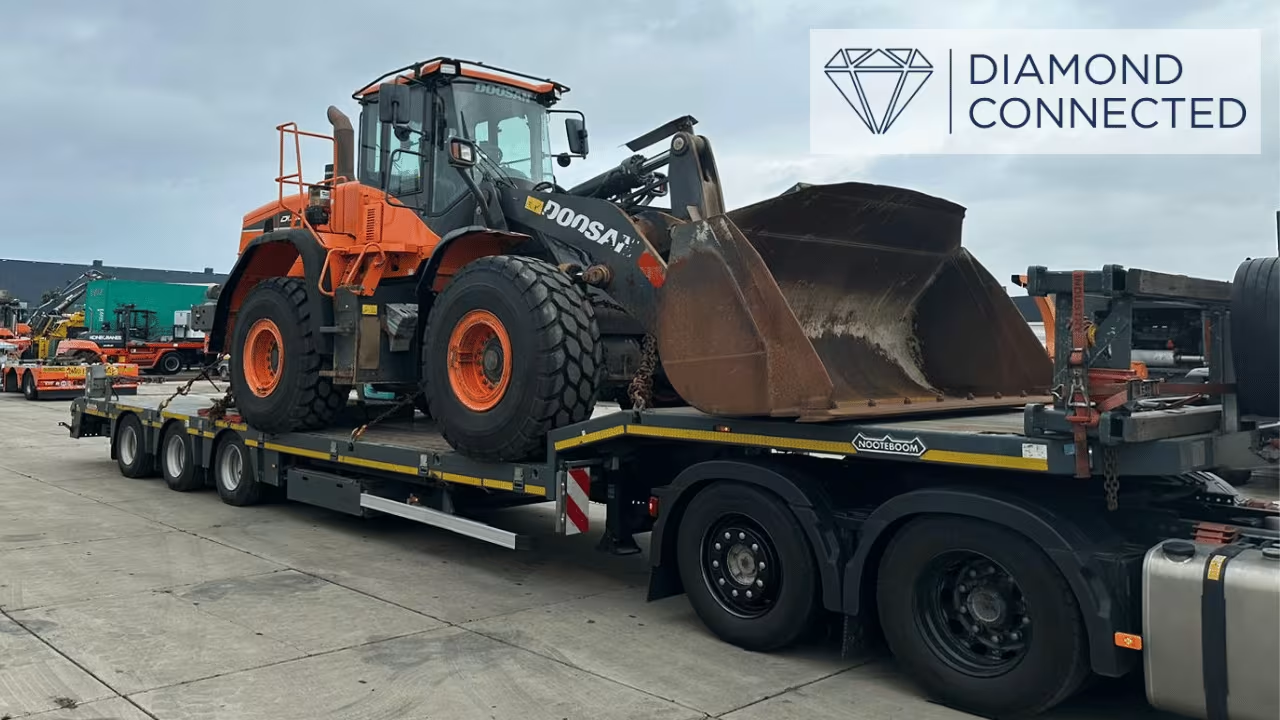
Tractor transportation across Europe is a routine logistics service. Tractors are regularly transported from Germany, France, the Netherlands and other European countries to Latvia, as well as from Latvia to other European countries.
Tractors are purchased from agricultural machinery dealers, at auctions or from private sellers, as well as moved between farms, companies and machinery service centres.
For tractor transportation to run smoothly and safely, the most important thing is to provide accurate information before the transport takes place. The more precise the information available to the logistics company, the easier it is to select a suitable vehicle, plan the route and, if necessary, arrange the required permits.
Let us look at what you need to know before transporting a tractor and what the machinery owner or buyer does not need to worry about.
Need to ship your cargo right away? Get a quotation within 45 minutes!
To reach your goals even faster, fill in the Diamond Connected order form, provide the cargo destination and additional information, and receive a cargo transportation quotation within just 45 minutes!
1. The most important thing – know the tractor’s dimensions and weight
One of the first questions a logistics specialist will ask is about the tractor’s dimensions and weight.
The key information is:
- width;
- height;
- length;
- weight.
These four measurements are essential for determining which vehicle and platform will be suitable for the particular tractor. They can also affect the route selection, the need for special permits and other transportation requirements.
If the exact dimensions are not known, they can often be found in the tractor manufacturer’s technical specifications or the documentation for the specific model.
It is important to provide the actual dimensions of the tractor in the configuration in which it will be transported.
2. Do not forget about additional equipment
Additional equipment can significantly change the dimensions of a tractor. Therefore, the logistics company should be informed not only of the tractor model but also of everything that will be attached to it during transportation.
This may include:
- front loader;
- dual wheels;
- counterweights;
- mower;
- baler;
- plough;
- other attached or mounted equipment.
In some cases, it is the additional equipment that turns a standard transport into an oversized or heavy-load transportation project.
It is therefore better to provide more information than initially seems necessary. If you are unsure whether a particular attachment needs to be mentioned, the safest approach is to include it when requesting the quotation.
3. A large tractor does not necessarily mean complicated transportation
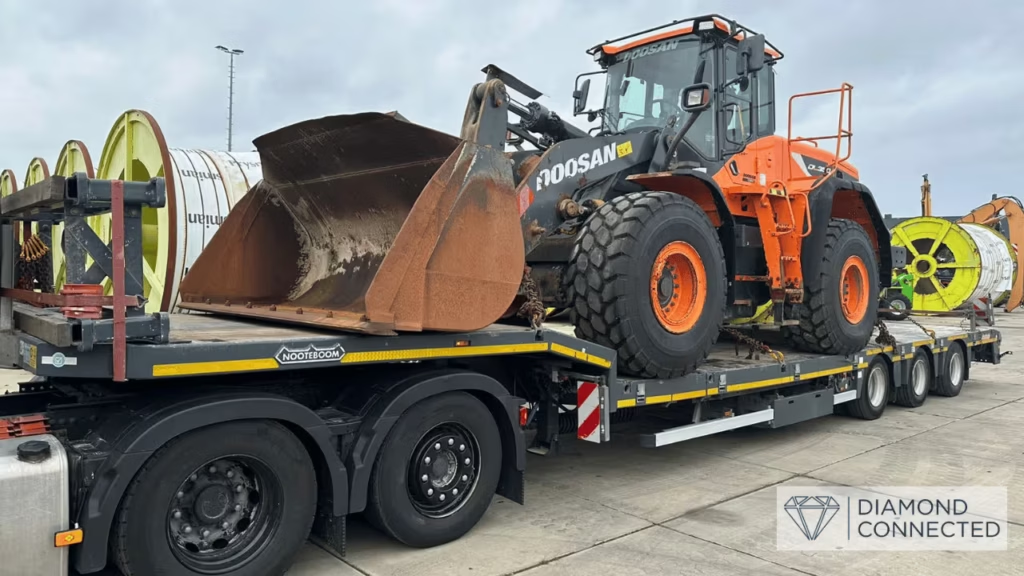
The size and weight of a tractor may seem impressive to a customer, but for a professional logistics company, transporting large and heavy agricultural machinery is nothing unusual.
Based on the tractor’s dimensions and weight, the logistics specialist selects a suitable transportation solution, arranges special permits where necessary and plans the route.
This means that the customer does not have to find a suitable platform themselves or determine which roads can be used to transport machinery of a particular size.
The most important thing is to provide accurate information about the cargo. The logistics company can take care of the rest of the transportation arrangements.
4. How is a tractor loaded for transportation?
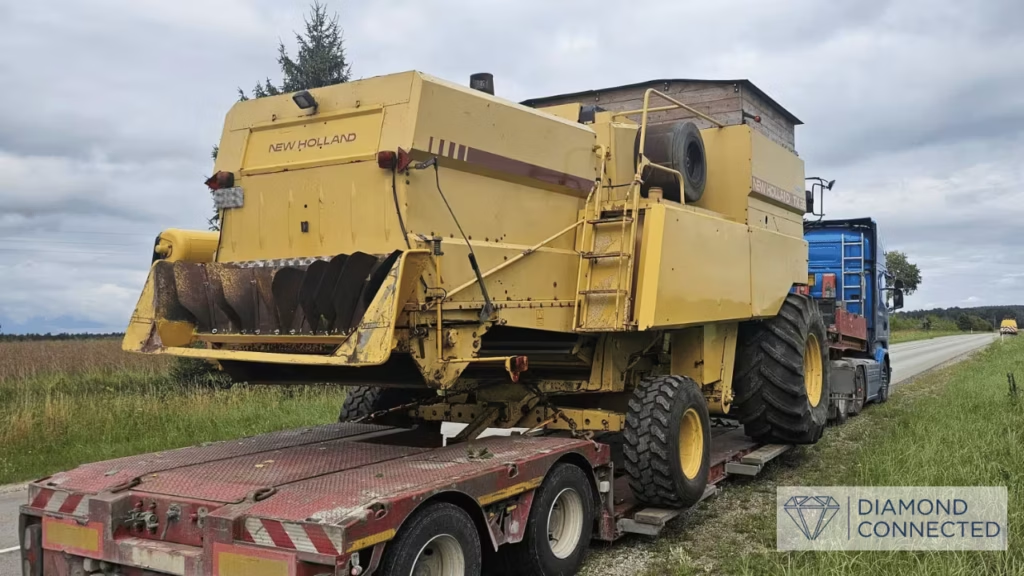
The loading method depends on the tractor’s technical condition and the specific transport vehicle.
If the tractor is roadworthy and can safely be driven onto the platform, it is usually loaded under its own power.
If the machinery is not operational, another solution is required. In such cases, a winch or other specialised loading equipment can be used.
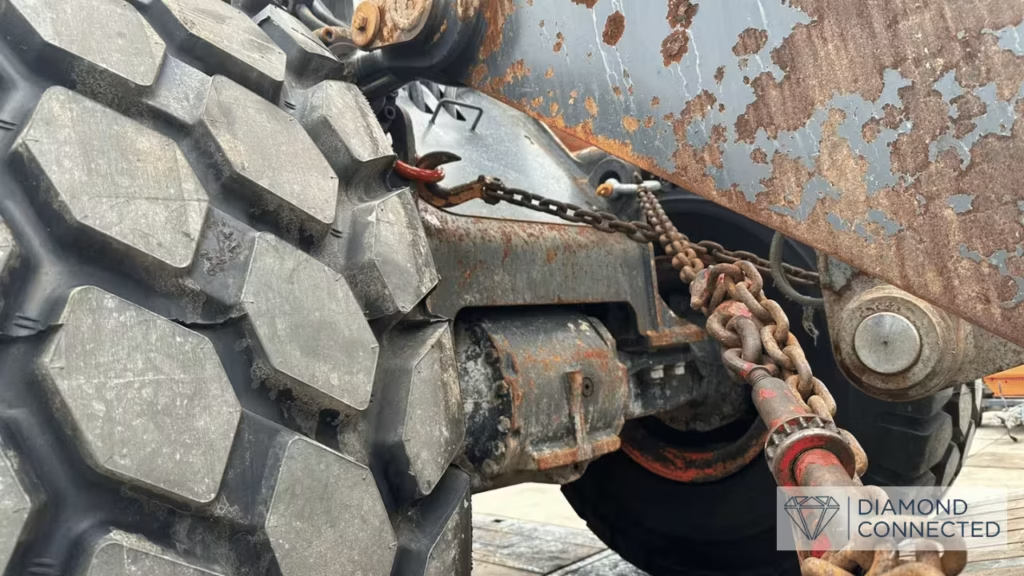
Once loaded, the tractor is secured according to the characteristics of the cargo. Professional securing systems are used to ensure that the machinery remains stable during transportation and does not pose a risk to the cargo itself or other road users.
5. Do you need to do anything yourself before transportation?
In most cases, the machinery owner or buyer does not need to carry out any complicated preparation.
The most important thing is to provide the logistics company with accurate information about:
- tractor model;
- length, width, height and weight;
- additional equipment;
- technical condition;
- collection address;
- delivery address;
- the time when the tractor will be available for loading.
After that, the main responsibility is simply to ensure that the tractor is available for loading at the agreed date, time and location.
The logistics company takes care of selecting the transport vehicle, route planning, required permits and the transportation process itself.
6. Common mistakes when transporting tractors
Most problems arise not during the actual transportation but during the preparation stage.
The most common mistakes include:
- providing inaccurate tractor dimensions;
- failing to mention additional equipment;
- not knowing the exact weight of the tractor;
- not providing information about whether the tractor is operational;
- arranging transportation too late;
- failing to agree on the loading time in advance;
- not taking into account special requirements at the collection or delivery location.
These situations can easily be avoided by planning the transportation in advance and providing the logistics company with as much complete information as possible.
Something that may seem unimportant to the owner can be very important to a logistics specialist. For example, additional wheels or a front loader can significantly change the overall dimensions of the cargo.
7. When are special permits required for tractor transportation?
Not every tractor transport requires special permits. This depends on the overall dimensions and weight of the cargo, the transport vehicle being used and the specific route.
If the tractor together with the transport platform exceeds the permitted limits, oversized or heavy-load transportation coordination and special permits may be required.
In such cases, the logistics company assesses the specific situation and arranges the necessary documentation and route approvals.
This is another reason why accurate tractor dimensions and weight are among the most important pieces of information at the beginning of the process.
8. Why is it better to plan tractor transportation in advance?
The more complex the transportation, the more time may be required to prepare it.
If the tractor is large or heavy, has additional equipment or is being transported between several European countries, it may be necessary to:
- select a suitable transport vehicle;
- develop a route;
- check dimensional and weight restrictions;
- arrange special permits;
- coordinate loading and delivery times;
- take specific route restrictions into account.
Therefore, the earlier the transportation planning begins, the greater the chance of selecting the most suitable transportation solution and avoiding unexpected costs or delays.
In conclusion
Preparing a tractor for transportation is generally not complicated. The most important thing is to provide accurate information about the machinery in good time – its dimensions, weight, technical condition and additional equipment.
This information determines the process of selecting the transport vehicle, planning the route and organising the transportation.
The customer does not have to deal with questions about platform selection, route planning or the required permits themselves. A professional logistics company assesses the specific situation and takes care of the transportation arrangements from loading to safe delivery.
If you need to transport a tractor from Germany, France, the Netherlands or another European country to Latvia, or vice versa, the most important thing is to start with accurate information about the machinery and its location.
The rest can be entrusted to your logistics partner.
Need to transport a tractor or agricultural machinery?
Send us the tractor make and model, its dimensions and weight, the collection and delivery addresses, as well as information about any additional equipment. We will assess the machinery’s specifications and prepare the most suitable transportation solution.
Responsible contact:
Dairis Dimants
Phone: +371 27050995
WhatsApp: +371 27050995
Email: info@dcd.lv
Get a tractor transportation quotation
Working hours: Monday–Friday, 08:30–17:00
Frequently Asked Questions About Tractor Transportation
Which countries can tractors be transported from?
Diamond Connected organises the transportation of tractors and other agricultural machinery from Germany, France, the Netherlands and other European countries to Latvia, as well as from Latvia to other European countries.
What information is required to calculate the cost of transporting a tractor?
To prepare an accurate quotation, we need the tractor make and model, length, width, height and weight, as well as the collection and delivery addresses. It is also important to provide information about all additional equipment that will be attached to the tractor during transportation.
Can a tractor be transported with a front loader or other additional equipment?
Yes. A tractor can be transported together with various types of additional equipment, but this must be specified in advance. A front loader, dual wheels, counterweights or other attachments can change the overall dimensions of the cargo and affect the choice of transportation solution.
Are special permits required to transport a tractor?
This depends on the overall dimensions and weight of the tractor and transport combination, as well as the specific route. If the transportation exceeds the permitted parameters, special permits and additional route coordination may be required. These matters are assessed and organised by the logistics company before transportation.
Can a tractor that is not operational also be transported?
Yes. If the tractor cannot drive onto the transport platform under its own power, a winch or other suitable specialised equipment can be used for loading. It is important to provide information about the tractor’s technical condition when arranging the transportation.
How long does it take to transport a tractor from Europe to Latvia?
The delivery time depends on the tractor’s location, its dimensions, the selected transport, the route, any required permits and the requested delivery timeframe. Relatively fast delivery can be arranged for standard transportation, while oversized and heavy machinery may require more time for planning.
How is the cost of transporting a tractor calculated?
The cost depends on the route and distance, the tractor’s weight and dimensions, additional equipment, the selected transport vehicle, required permits and other specific transportation requirements. Accurate pricing requires information about the particular machinery and route.
Does Diamond Connected also transport other agricultural machinery?
Yes. In addition to tractors, Diamond Connected can also organise the transportation of other agricultural and specialised machinery. Each transport project is assessed individually based on the machinery’s dimensions, weight, technical condition and route.
Call Dairis · Write on WhatsApp · Get a tractor transportation quotation
If Dairis is unavailable, please contact the Diamond Connected office: +371 67973747.
Diamond Connected – a partner for tractor, agricultural machinery and other complex and specialised cargo transportation.
Diamond Connected® office:
Vidrižu iela 1, Rīga, LV-1006
Business days from 08:30 to 17:00
+371 67973747
+371 27050995
e-mail: info@dcd.lv