What Is Oversized Cargo? Dimensions, Permits & Transport Planning


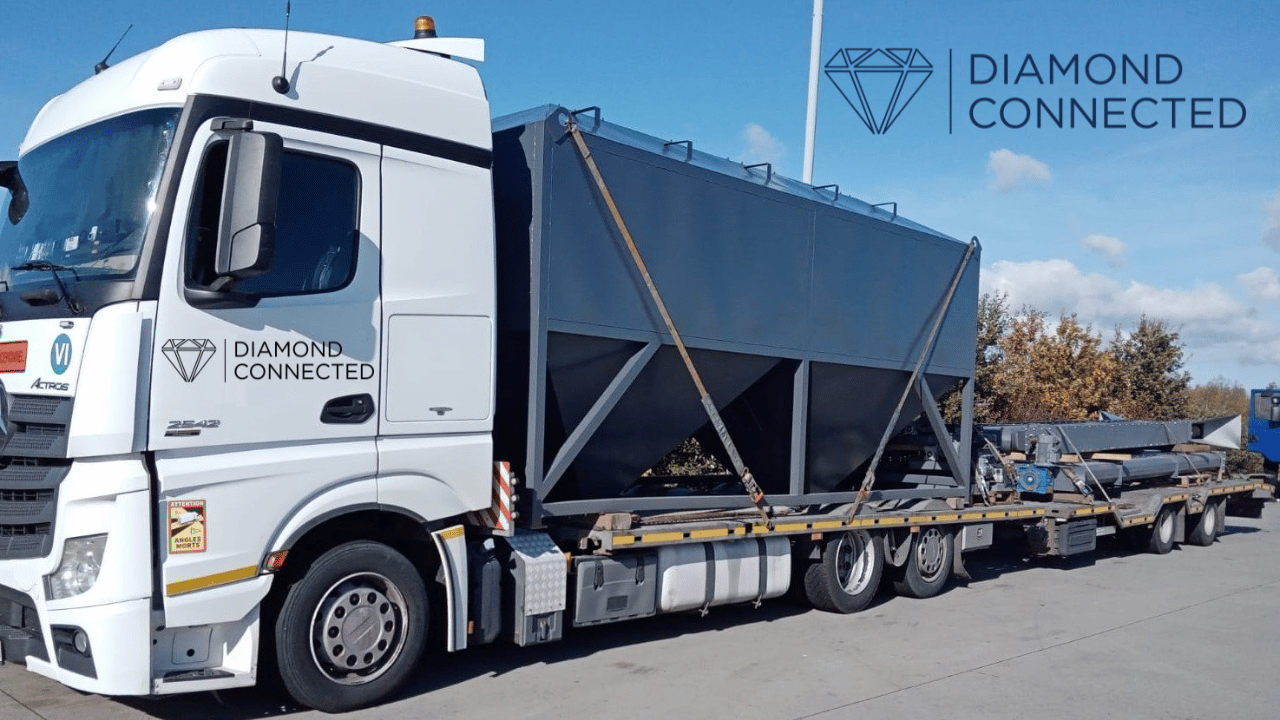
What is oversized cargo?
Oversized cargo is defined as a load whose dimensions or weight exceed the vehicle and cargo dimensions permitted in the country’s road traffic. It should be noted that the specified parameters may differ in each country.
For example, the standard parameters in Latvia are:
- width – up to 2.55 m;
- height – up to 4.00 m from the road surface;
- length depends on the type of vehicle (for example, a truck with a trailer has different restrictions than a semi-trailer);
- permissible mass and axle loads are also regulated.
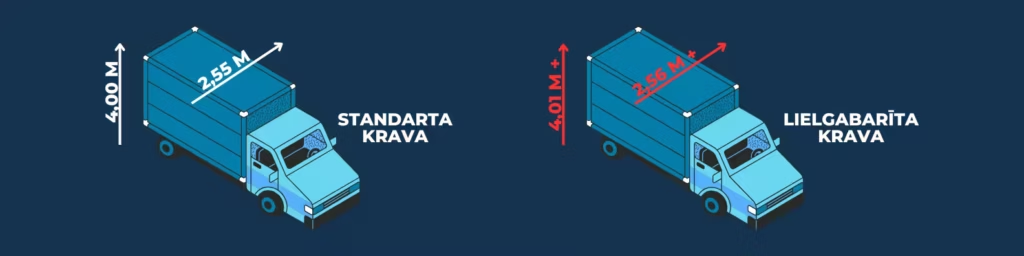
Legally, it is not only the cargo itself that is assessed, but also the overall dimensions of the vehicle or vehicle combination with the cargo. A vehicle is considered an oversized vehicle if at least one of its dimensions exceeds the limits permitted under the Road Traffic Regulations. If the permitted gross weight or axle load is exceeded, the vehicle is considered an overweight vehicle. A single shipment may be both oversized and overweight at the same time.
Special permits are usually required for oversized transport, and specific transport requirements must be observed.
Important: In international transport, the parameters and requirements of each country through which the cargo passes must be taken into account.
Proper choice of transport, a suitable route, and prepared permits are necessary.
What oversized cargo is transported most frequently?
The most common oversized cargo includes:
- tractors;
- combine harvesters;
- excavators;
- front-end loaders;
- agricultural machinery;
- forestry machinery;
- trucks;
- buses;
- modular houses;
- industrial equipment;
- metal structures;
- tanks/cisterns;
- transformers;
- wind turbine components;
- bridge structures.
All of these are oversized cargo, but each requires selection of the appropriate platform type and individual preparation for transport.
Why is specially selected transport necessary?
One of the reasons for choosing the right transport is the possibility of lowering the overall height of the cargo and loading cargo that is wider than the trailer itself. It is also very important to distribute the cargo weight evenly and secure it safely.
Because oversized cargo varies greatly, the choice of transport is also extensive.
Depending on the cargo dimensions, the following may be used, for example:
- low-bed platforms;
- telescopic (extendable) platforms;
- platforms with ramps (for machinery transport);
- modular platforms for particularly heavy and long cargo;
- platforms with a manipulator;
- and others.
Oversized transport requires knowledge and careful preparation.
Need to ship your cargo right away? Get a quote within 45 minutes!
To reach your goals even faster, fill out the Diamond Connected order form, provide the cargo destination and any additional information, and receive a freight transport quote within just 45 minutes!
If you need to arrange the transport of a specific cargo, take a look at our oversized cargo transportation service.
How is oversized transport planned?
The process usually looks approximately like this:
1. Cargo assessment
The following are determined:
- length;
- width;
- height;
- weight;
- centre of gravity.
2. Choice of transport
The most suitable platform is selected according to the cargo. For example:
- platforms with ramps are often used for tractors;
- specialised platforms (car carriers) for heavy trucks;
- low-bed platforms for modular houses;
- flatbed platforms for metal structures;
- platforms with 4 or more axles for very heavy equipment.
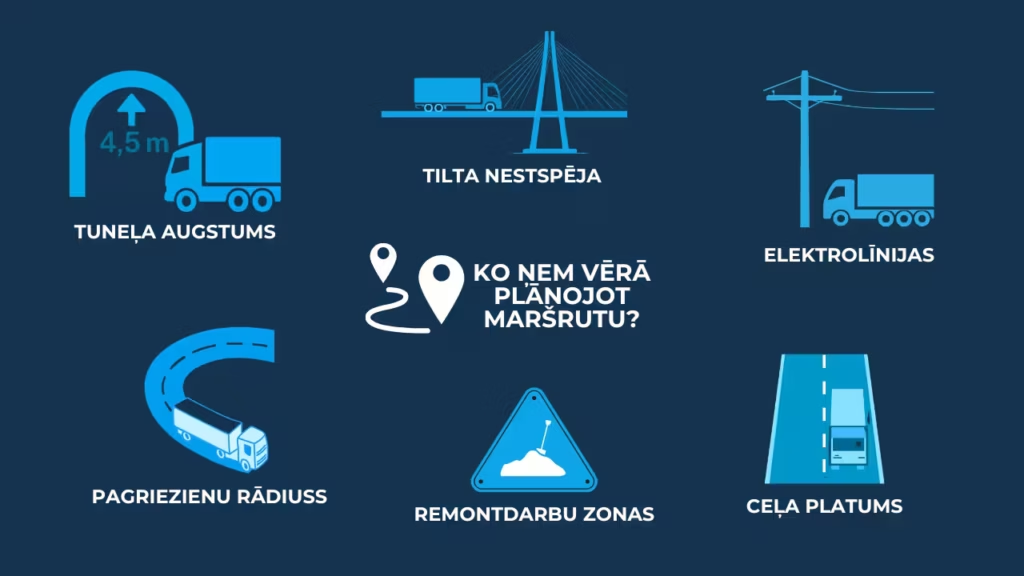
3. Route planning
This is one of the most important and at the same time most complicated stages. The shortest route cannot always be chosen, because the following are evaluated, for example:
- bridge load-bearing capacity;
- height of tunnels and bridges;
- height of power lines;
- road width;
- roundabouts;
- roadworks zones;
- turning radii.
4. Obtaining permits
If required, the following are obtained:
- permits from road authorities;
- approvals from local municipalities;
- transit country permits.
5. Escort vehicles
If the cargo is very wide or long, escort vehicles are required in order to:
- warn other road users;
- assist in negotiating difficult sections.
This ensures traffic safety.
Here too, the requirements of different countries must be taken into account, as larger cargoes may also require a police escort.
Planning does not end the process. There are also other preparatory works, for example preparing the machinery for transport.
How to prepare the cargo for transport?
- the cargo must be measured;
- it must be weighed;
- all loose parts must be removed;
- the cargo must be secured;
- documents must be prepared;
- the driver must be informed about any non-standard features of the cargo.
This is a highly responsible task. Care must be taken for the safety of the driver, other road users, and of course the cargo itself.
What affects the transport price?
We have arrived at the most frequently asked question: “How much does oversized cargo transport cost?”
We have already become acquainted with the planning and preparation of the transport. We have established that the process is quite complex and detailed.
This means that the transport price is determined not only by the kilometres to be driven, but also by:
- cargo weight;
- width;
- height;
- length;
- type of platform required;
- costs of special permits;
- number and costs of escort vehicles;
- complexity of loading and unloading;
- use of ferries;
- delivery deadline.
Therefore, the price of two transports on the same route can differ significantly.
Transport is not merely moving cargo from point A to point B, but a responsible and complex process, which is why it is important to entrust it to experienced people.
Why choose a professional logistics company?
Even a seemingly small mistake can cause significant additional costs or delays. A logistics company takes responsibility for the entire process, from planning to delivery of the cargo to the required point.
A professional logistics partner takes care of:
- selection of the most suitable transport and platform for the specific cargo;
- planning of a safe and efficient route;
- preparation of the necessary permits and documentation;
- organisation of escort transport if required;
- coordination of international transport across several countries;
- safe securing of the cargo and delivery to the destination.
If you want a safe and efficient transport process, entrust it to professionals!
Author: Dairis Dimants
Position: Head of a logistics company
Experience: more than 15 years of experience in logistics
Contacts: +371 27050995 info@dcd.lv
Diamond Connected® office:
Vidrižu iela 1, Rīga, LV-1006
Business days from 08:30 to 17:00
+371 67973747
+371 27050995
e-mail: info@dcd.lv