

Nepieciešams nogādāt kravu? Saņem pakalpojuma cenas aprēķinu un prognozē plānotā pārvadājuma izmaksas 45 min laikā.
CLAAS LEXION 8700 TT Combine and 13 m Header Transport from Germany to Latvia


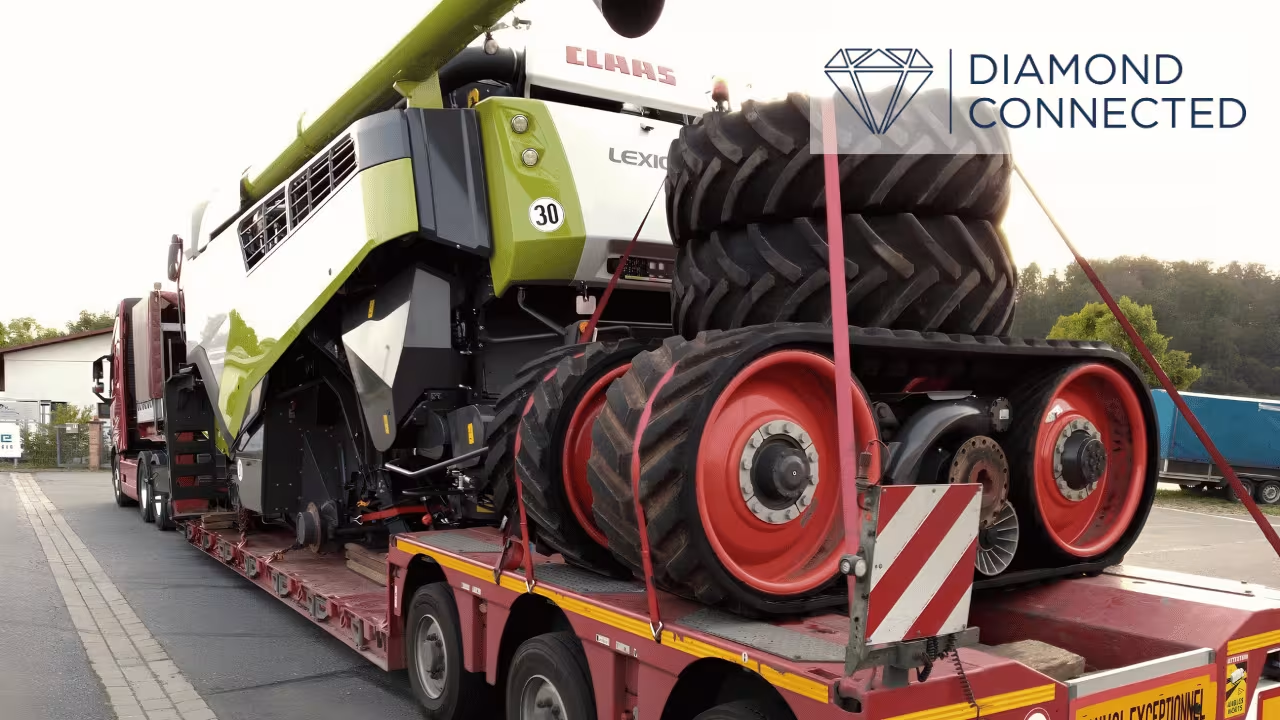
A full-size combine harvester and its header are two different types of cargo when it comes to transport. The combine requires a platform suitable for its weight and dimensions, while the long header requires a solution that allows it to be safely loaded, secured and protected throughout the journey.
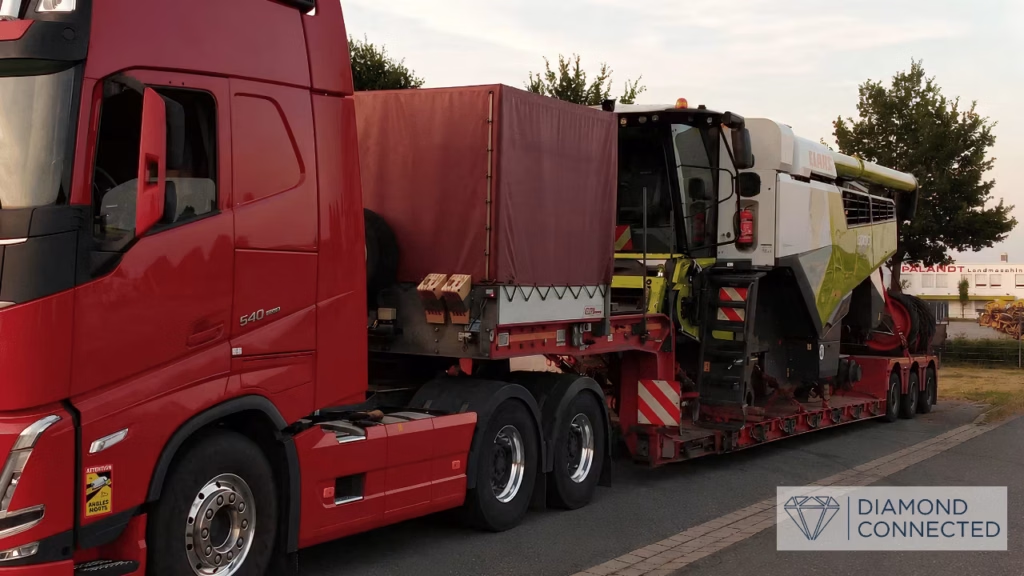
In this project, Diamond Connected organised the transport of a CLAAS LEXION 8700 TT combine harvester and a 13.00-metre header from Holle, Germany to Bauska Municipality, Latvia. Two transport units were used: the combine was transported on a low-loader platform, while the header was carried in a curtain-side trailer.
To reduce the combine’s transport width, its wheels were removed. The header was loaded into the curtain-side trailer from the rear using a ramp. This approach allowed each part of the equipment to be assigned a transport solution suited to its construction and loading requirements.
Direct contact for agricultural machinery transport:
Dairis Dimants – +371 27050995, info@dcd.lv.
Diamond Connected organises oversized cargo and agricultural machinery transport throughout Europe – from selecting the appropriate transport vehicle and planning the loading process to coordinating the route, required permits and delivery.
Project overview:
Route: Holle, Germany → Bauska Municipality, Latvia
Main cargo: CLAAS LEXION 8700 TT combine harvester
Additional cargo: 13.00 m long header on transport wheels
Transport solution: low-loader platform for the combine and curtain-side trailer for the header
Combine preparation: wheel removal to reduce transport width
Header loading: loaded into the trailer from the rear using a ramp
Result: combine and header coordinated and delivered from Germany to the destination in Bauska Municipality
Customer’s requirements
The customer needed to transport a complete harvesting equipment set from Germany to Latvia — a CLAAS LEXION 8700 TT combine harvester and a 13-metre-long header.
Both loads had to be handled as part of one project, but their construction and loading requirements were significantly different. The combine is tall, wide and heavy self-propelled machinery that requires a suitable platform and transport configuration. The header is a long attachment with a different weight distribution and had to be loaded into an enclosed cargo space together with its transport wheels.
Therefore, the task was not simply to book two trucks. The combine’s preparation, the loading method for both cargo units, securing arrangements and coordinated delivery to Bauska Municipality all had to be planned in advance.
Main transport challenges
Combine transport width
The factory or working configuration of agricultural machinery is not always the most suitable configuration for transport on public roads. In this project, the combine’s wheels increased its overall width, so they were removed before departure.
Removing the wheels helped reduce the machine’s transport width. This is important not only when selecting the transport platform, but also when planning the route and assessing the overall transport dimensions. The removed wheels were transported together with the combine and separately secured on the platform.
Two cargo units require different solutions
It was not practical to treat the combine and the 13-metre header as one identical load. A low-loader platform was the appropriate solution for the combine, while the header’s construction and loading method allowed it to be transported in a curtain-side trailer.
Using two transport units allowed each cargo unit to have an appropriate loading height, securing method and level of protection, while maintaining coordinated project management throughout the transport.
Precise header loading planning
A 13-metre-long attachment cannot simply be loaded into a trailer without checking its dimensions and loading trajectory in advance. The header’s length is not the only factor to consider – the width and height of its transport wheels, the trailer’s rear opening, internal height and available loading equipment must also be taken into account.
In this project, the header was pushed into the curtain-side trailer from the rear using a ramp. This allowed it to be positioned lengthwise and secured for transport.
The selected transport solution
1. Planning two transport units
Before loading, separate transport solutions were selected for the combine and the header. This approach meant that neither cargo unit had to be adapted to a compromise solution. Instead, each could be transported using the vehicle best suited to its requirements.
A low-loader platform was selected for the combine. Its lowered cargo deck helps limit the overall height of the transport combination, which is particularly important when transporting tall self-propelled machinery. A curtain-side trailer was selected for the header, allowing the attachment to be loaded from the rear and transported protected from direct road and weather exposure.
2. Combine preparation and wheel removal
The CLAAS LEXION 8700 TT was positioned on the low-loader platform and prepared for transport. To reduce its overall width, the combine’s wheels were removed.
The sequence of operations is important in this type of work: the machinery must first be positioned safely on the platform, followed by the necessary dismantling work, after which both the combine and the removed components must be secured. The wheels were positioned separately on the platform so that they could not roll or move during transport.
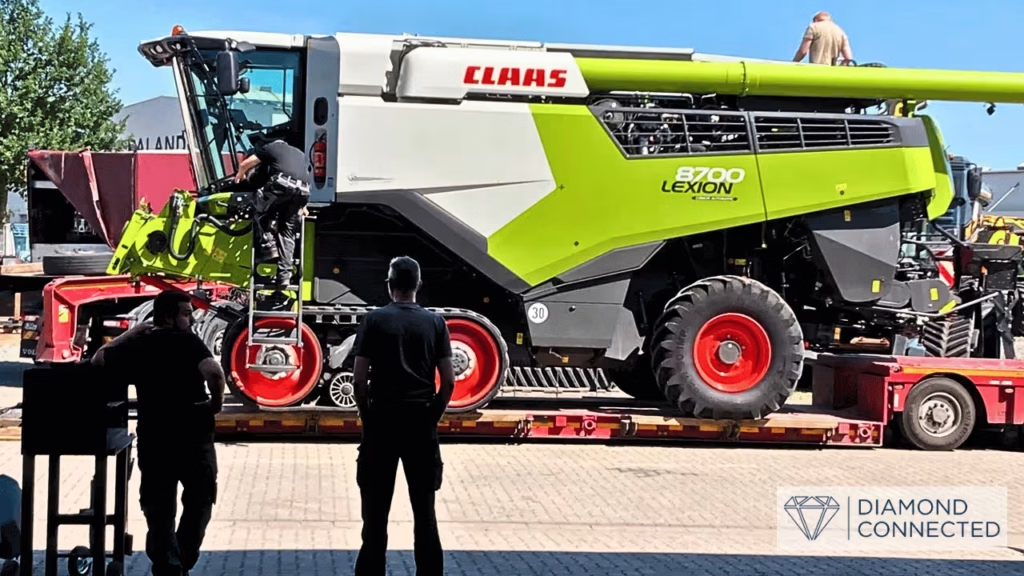
3. Securing the combine on the low-loader platform
After the transport configuration had been prepared, the combine was secured to the platform. The positioning of the securing equipment must be adapted to the machine’s construction, weight distribution and the platform’s securing points so that the cargo remains stable during braking, acceleration and turns.
The removed wheels were also secured separately. This is important because every removed component becomes an individual cargo unit during transport and must be prevented from sliding, rolling or coming into contact with other cargo.
4. Loading the header into the curtain-side trailer
The 13.00-metre-long header was transported on its transport wheels. A ramp was used for loading, allowing the header to be pushed into the curtain-side trailer from the rear.
Once the attachment was positioned inside the cargo area, it was secured against movement. The securing points were connected to the transport wheel assembly and the header structure, while the cargo was positioned lengthwise inside the trailer. The curtain-side construction provided access during loading while also protecting the cargo during transport.
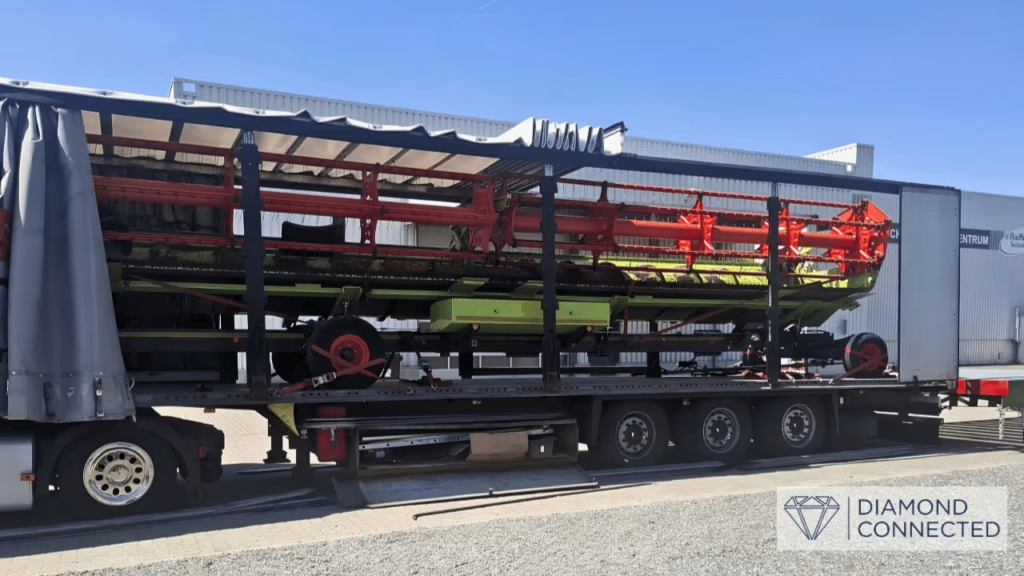
5. Route and transport coordination
The transport was organised from 31188 Holle, Germany to Bauska Municipality, Latvia. Since the combine and header were transported in two separate units, their collection, departure and delivery processes had to be coordinated.
The combine’s actual dimensions after the wheel removal were important when assessing the route and transport requirements. For oversized machinery transport, any required permits, escort vehicles and route restrictions must always be determined based on the final cargo configuration rather than the manufacturer’s model name alone.
Result
The CLAAS LEXION 8700 TT combine harvester and its 13-metre-long header were delivered from Holle, Germany to Bauska Municipality, Latvia. The combine travelled on a low-loader platform with its wheels removed to reduce transport width, while the header was transported separately in a curtain-side trailer.
For the customer, this meant one coordinated project covering the complete equipment set: two different transport solutions were selected, loading and securing were planned, and the delivery of both cargo units to the same destination was coordinated.
This transport demonstrates that when transporting large agricultural machinery, the most effective solution is not always to try to fit everything onto one vehicle. A safer and more practical result can often be achieved by dividing the equipment into separate transport units and selecting an appropriate platform or trailer for each part.
Need to transport a combine, header or other agricultural machinery?
Send us the make and model of the machinery, its actual transport dimensions and weight, loading and delivery addresses, photographs, as well as information about additional equipment and available loading options. We will assess the most suitable transport platform, preparation requirements and route conditions.
Direct contact for agricultural machinery transport:
Dairis Dimants
Phone: +371 27050995
WhatsApp: +371 27050995
Email: info@dcd.lv
Request a combine transport quote
What can Diamond Connected organise for agricultural machinery transport?
Depending on the machinery, route and loading location, we can organise:
- assessment of the machinery’s dimensions and transport configuration;
- selection of a suitable low-loader platform, trailer or semi-trailer;loading plans for combines, tractors and other machinery;
- transport of additional components and attachments in a separate transport unit;ramps, winches, cranes or other loading solutions;
- cargo securing and fixation of separate components;
- assessment of route restrictions;
- required oversized transport permits and escort vehicle arrangements;
- collection coordination from machinery dealers, auctions, service centres or private sellers;
- delivery to a farm, company, service centre or other specified address.
What information is needed for a transport quote?
To select suitable transport and prepare an accurate quotation, please provide:
- machinery make, model and year of manufacture, if known;
- length, width, height and weight in the actual transport configuration;
- all additional equipment – header, transport wheels, tracks, counterweights or other attachments;
- whether the wheels or other protruding components can be removed;
- whether the machinery is in working condition and can be driven;
- exact loading and delivery addresses;
- access conditions at both locations;
- whether a ramp, suitable forklift, crane or other loading equipment is available;
- preferred collection and delivery time;
- photographs of the machinery and loading locations.
A more detailed preparation checklist is available in the Diamond Connected article “How to Prepare a Tractor for Transport?”. The same basic information – actual dimensions, weight, technical condition and additional equipment – is also important when transporting combines and other self-propelled machinery.
Frequently asked questions
Why are the wheels removed from a combine before transport?
Removing the wheels can reduce the combine’s overall transport width. This can affect the choice of transport vehicle, available routes, permit requirements and transport costs. The decision is made based on the actual dimensions of the specific machine and the selected transport platform.
Can a combine and header be transported on one vehicle?
It depends on the dimensions and weight of the combine and header, the selected platform, permitted load and overall transport dimensions. In this project, two transport units were used – a low-loader platform for the combine and a curtain-side trailer for the header.
Can a 13-metre-long header be transported in a curtain-side trailer?
Yes, provided that the header’s actual transport dimensions, transport wheels, trailer’s internal dimensions and rear opening are compatible. The loading trajectory and ramp capacity must also be checked in advance. In this transport project, the header was loaded from the rear using a ramp and secured inside the trailer.
Is a low-loader platform required for every combine?
No. The type of platform is selected according to the specific combine’s dimensions, weight, ground clearance and final transport configuration. A lower cargo deck is particularly useful for tall machinery because it helps reduce the overall height of the transport combination.
Who is responsible for removing wheels or other components?
Responsibility for dismantling and reinstallation should be agreed before transport. The work requires competent specialists, suitable equipment and a safe working area. The logistics partner should be informed in advance about the configuration in which the machinery will be ready for loading.
Are special permits required to transport a combine?
This depends on the actual width, height, length and weight of the transport combination after the machinery has been prepared, as well as the specific route and national requirements. The need for permits and escort vehicles is assessed based on the final transport dimensions.
How is the cost of combine and header transport calculated?
The price depends on the route, actual dimensions and weight of the machinery, number of transport units required, platform type, loading and unloading conditions, preparation work, permits, escort vehicles and required delivery schedule. Accurate pricing requires the details and photographs of both cargo units.
Call Dairis · Write on WhatsApp · Request a transport quote
If Dairis is unavailable, call the Diamond Connected office: +371 67973747.
Diamond Connected – a partner for complex and non-standard cargo logistics.

Starptautiskie kravu pārvadājumi uz jebkuru Eiropas valsti.
A real Diamond Connected transport project
Facts verified by: Dairis Dimants, oversized and non-standard cargo transport specialist
Diamond Connected® office:
Vidrižu iela 1, Rīga, LV-1006
Business days from 08:30 to 17:00
+371 67973747
+371 27050995
e-mail: info@dcd.lv

Follow us:

Copyright © 2010-2026 Diamond Connected®. All rights reserved.